
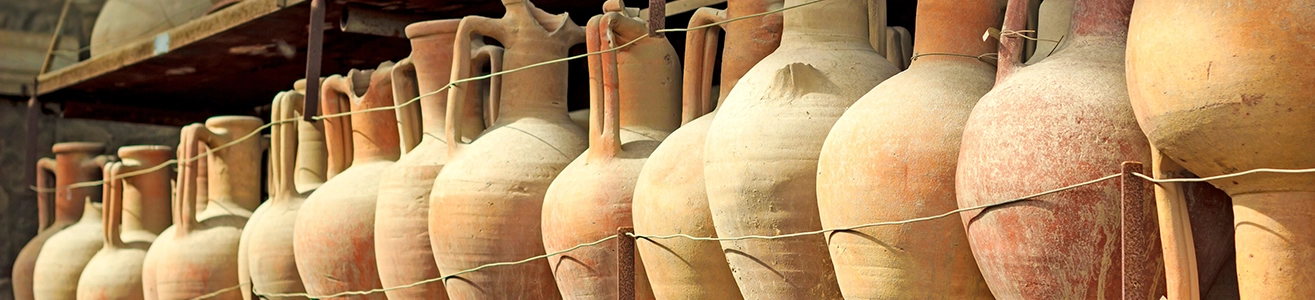
Enhanced Elemental Analysis for Archaeometry, Art Conservation & NAGPRA Compliance
Handheld XRF Solutions for Archaeometry
Archaeometry, the professional field that applies "hard" science to archeology, has long benefited from using X-ray fluorescence (XRF) technology. XRF enables comprehensive qualitative and quantitative analysis of historic objects and soil composition while being completely nondestructive. However, archaeometry requires working in the field and traveling on foot through a variety of terrains and weather conditions. This means that XRF tools must be portable, lightweight, and durable.
Luckily, we have you covered with the Thermo Scientific Niton XL5 Plus handheld analyzer. This advanced scientific tool quickly and precisely analyzes soil composition, ceramics, textile dyes, glass, glazes and varnishes, pigments and paints, and archeological metals and alloys. With a presence in hundreds of universities across the world, the Niton XL5 Plus has become the de facto standard for XRF in archeological science.
Click here to contact a Thermo Scientific and Handheld Scientific Systems expert in XRF for archeological science, or click here to learn more about Thermo Scientific and Handheld Scientific's workshops for the XRF analysis of non-uniform materials, archeological samples, and objets d'art.
Archaeological Information in Soil Composition
The presence of certain elements above or below the background average for a site can indicate certain types of human activity. For example, high concentration of lead (Pb) in soil that diminishes as you move away from a line may mean that lead pipes ran through that soil at one time, as well as where the pipes were placed. Elevated levels of strontium and rubidium can indicate an area where fire was used, while elevated levels of iron may represent a metalworker's shop or an area where blood was shed repeatedly (like a slaughterhouse or ritual sacrifice altar). It may surprise people unfamiliar with soil archaeology to find out that such elemental signals in soil can persist for hundreds of years.
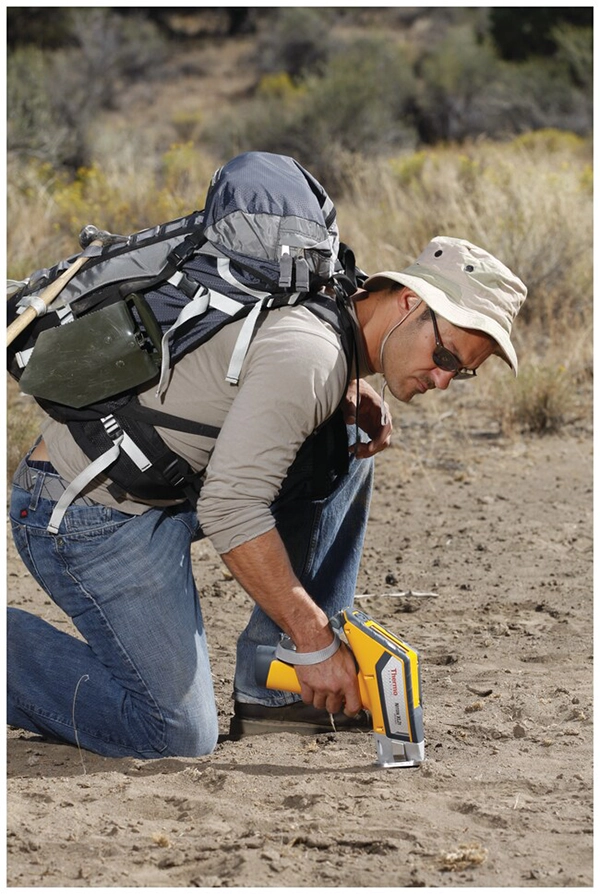
Archaeological Soil Analysis with the Thermo Scientific Niton XL5 Plus
Unearthing the details of human history by using the chemical or elemental analysis of soil is a known method of archaeological science, but it can be very expensive and time-consuming. Luckily, we no longer need to rely on costly, difficult, and time-consuming methods (such as ICP) to conduct archaeometric soil studies. We now have advanced tools that deliver a high soil sample throughput at a low per-sample cost, like the Thermo Scientific Niton XL5 Plus handheld XRF analyzer.
The Thermo Scientific Niton XL5 Plus offers the archeological scientist a fast, fully portable method of obtaining complete elemental soil chemistry from any soil sample. The advantages of the Thermo Scientific Niton XL5 Plus for archeometric soil analysis include:
- Portable elemental analysis anywhere, any time, from the lab to remote archeological sites
- Specialized software for applications in archaeology offer multiple ways to process your data
- In-situ sample analysis to maximize throughput, or samples can be collected and homogenized for laboratory-quality analysis
- Elemental analysis range is Mg (magnesium) through U (uranium)
- Expert support teams from Thermo Scientific and Handheld Scientific that specialize in XRF applications in art and archaeological science
Let us take your research to the next level - click here to contact our specialized XRF in archaeological science experts today
Elemental Composition of Obsidian and Other Lithic Materials as Evidence of Human Trade and Migration
Obsidian is an igneous rock with certain special properties that have allowed archeologists and archeological scientists to study historical human trade and migration routes. Obsidian is a glass-like, homogenous substance that forms under high heat. The elements present in a sample of obsidian—and their comparative ratios—indicate where an obsidian sample originates geologically, also known as its source or its provenience. The primary elements important for sourcing obsidian are strontium (Sr), zirconium (Zr), yttrium (Y), rubidium (Rb), niobium (Nb), copper (Cu), Fe (iron), and zinc (Zn), while others play valuable secondary roles.
Sourcing obsidian is important to archeologists and archeological scientists because it was such a common material for tool-making, and therefore a valuable trade commodity. How obsidian moved through the world geographically can provide significant archeological information about which peoples traded with each other, how groups migrated over time, and other sought-after historical information. While the homogeneity and unique geological properties of obsidian make it particularly useful for sourcing studies, analysis of basalt and other lithics can yield similar archeological information.
XRF for Obsidian Sourcing: The Thermo Scientific Niton XL5 Plus Is Purpose-Built for Obsidian Research
Because so much valuable archeological information can be gained from the elemental analysis of obsidian, archeological scientists and archaeologists need the best tools for easy, inexpensive, reliable elemental analysis.
The Thermo Scientific Niton XL5 Plus family of handheld XRF analyzers is the perfect tool to meet your obsidian analysis needs, delivering these unique advantages:
- Fully portable, from remote archeological sites to the university or museum laboratory
- Low per-sample cost and fast turnaround time
- 100% non-destructive analysis. Your sample is not altered in any way, regardless of the number of times it is subjected to analysis
- Methodology and software designed specifically for both semi-quantitative and quantitative analysis
- identify which elements are present in your obsidian sample
- identify the ratios of elements present can be compared, charted, and the obsidian source identified or characterized and separate groups of obsidian samples by source even when the specific source is not known
- Thermo Scientific and Handheld Scientific experts who fully understand your specific needs, as well as the nuances of obsidian and obsidian sourcing.
Click here to contact our team of industry experts today
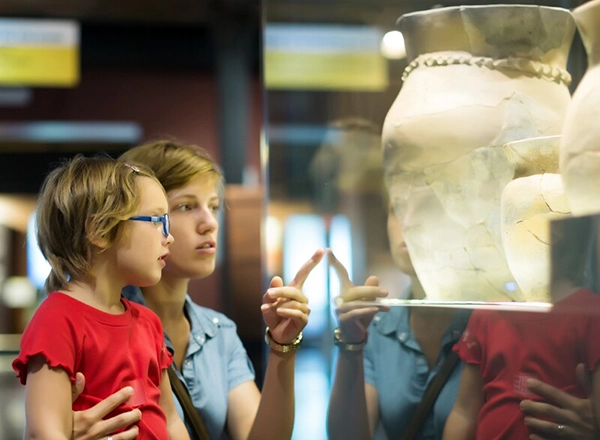
Handheld XRF Solutions for Art Conservation
The field of art conservation is crucial for understanding human history, conserving artwork for the future, and restoring the artwork of the past. None of this is possible, however, without the precise identification and analysis of the materials in art objects. Verifying the exact elemental composition of historic artwork is imperative for determining how the object was made, if it traveled along a trade route, what kind of preservation treatments it may need, and many other important data points. X-ray fluorescence (XRF) has long been the technology of choice for conducting elemental analysis in art conservation, as it is both reliable and completely nondestructive.
The Thermo Scientific Niton XL5 Plus takes XRF technology to the next level. Portable and versatile, the Niton XL5 Plus analyzes non-uniform materials with unmatched sensitivity and precision. Being lightweight and portable, the Niton XL5 Plus can easily be brought to any art object without removing it from its frame or place of storage, ensuring that no damage is caused by moving irreplaceable items.
The Thermo Scientific Niton XL5 Plus was purpose-built for the art conservation community with unparalleled elemental analysis of pigments, alloys, ceramics, glazes, varnishes, patinas, glass, and lithic materials, to name a few.
Click here to contact Thermo Scientific and Handheld Scientific's specialized art conservation applications scientists today to learn more.
XRF for Art Conservation: Pigment Analysis
Among the many challenges in art conservation and related research fields is the analysis of inorganic pigments. Pigments can largely be identified based on their qualitative elemental make-up. For example, vermilion (a bright red pigment made from the mineral cinnabar) is composed primarily of Hg (mercury) and S (sulfur), while cadmium red (a pigment that produces a similar range of hues as vermilion) is composed primarily of Cd (cadmium), S (sulfur), and Se (selenium).
Using the Thermo Scientific Niton XL5 Plus handheld portable XRF analyzer to obtain qualitative spectral data from a pigment sample, a conservator or other researcher can easily obtain compositional information about the pigment in question, quickly resolving such questions as whether a pigment is vermilion or cadmium red.
The Thermo Scientific Niton XL5 Plus for Non-Destructive Pigment Analysis
The Thermo Scientific Niton XL5 Plus is small and highly portable, and can be used in the lab or in-situ. You can take the Niton XL5 Plus to a fresco in Italy, a cave painting in Mexico, or a painting hanging in a museum gallery. The Niton XL5 Plus can analyze a large variety of different inorganic pigment samples to garner basic information about their composition, including:
- Raw pigment chunks or powders
- Mineral samples
- Pigment/paint on rock surface
- Pigment/paint on ceramic (If pigment is covered in a Pb glaze, pigment analysis may not be possible)
- Pigment/paint on canvas, gesso, etc.
- Pigment/dye on textiles
- Pigment in colored glass
- Pigment/ink on paper
- Pigment on organic samples such as animal hide, human skin (non-living only), wood, etc.
Most importantly, XRF (x-ray fluorescence) is a non-destructive analytical technique, which allows you to use it on the most sensitive samples without worrying about your object's safety. Used in hundreds of museums and universities worldwide, the most precious paintings and archaeological samples are entrusted to the Thermo Scientific Niton XL5 Plus every day.
Click here to contact our knowledgeable, specialized Art Conservation & Archaeology Team to learn more about the Niton XL5 Plus or to set up a workshop on XRF physics and art conservation.
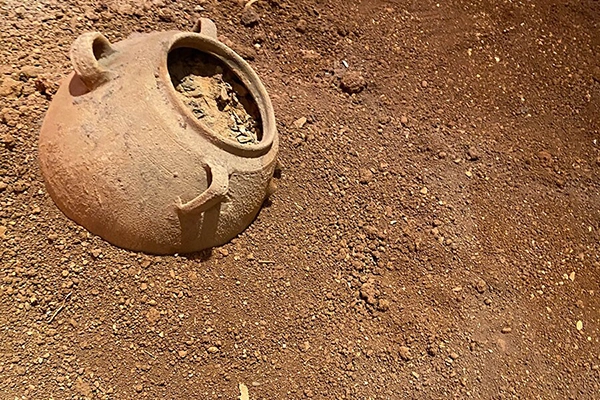
XRF and NAGPRA: Native American Graves Protection and Repatriation Act
The Native American Graves Protection and Repatriation Act—NAGPRA for short—was enacted in 1990. Its purpose is to protect the rights of Native peoples in the United States regarding their cultural heritage. NAGPRA recognizes and protects the right of Native Americans and Native Hawaiians to maintain or regain control of Native items of cultural and religious significance. Some of the types of items of cultural heritage that are regulated and protected under NAGPRA include:
- Objects representing Native American cultural heritage and patrimony
- Human remains
- Funerary objects
- Burial grounds
- Sacred objects
- Objects of ceremonial significance
- Objects of cultural patrimony
The two parties most affected by the NAGPRA legislation are the Native American tribes and non-tribal museums/research institutions that have items of Native American origin, such as those described above. One major mandate of the NAGPRA legislation states that museums in possession of items of Native American cultural patrimony may be required to return such items to the Native tribes from which the objects originate. The process of returning objects of Native American origin to their rightful Native American owners is known as repatriation.
NAGPRA: Toxic Heavy Metals Pose Repatriation Challenge
When historic objects are made of organic materials, they tend to attract pests. Therefore, as little as twenty years ago, museums treated such objects in their collections with arsenic (As) and mercury (Hg) in order to deter insects and rodents. These toxic heavy metals made the objects-which included many items of Native American origin-dangerous to handle, and their dust unsafe to inhale. So, when these objects are repatriated to Native American tribes and organizations, many still present a potential health hazard. These objects pose the most danger when tribes intend to put them back into cultural use; for example, a mask that has been treated with arsenic. In order to protect people in both the museum and Native communities, institutions that return items to Native Americans must know of and disclose any health hazards those items might pose.
XRF for NAGPRA Compliance: Straightforward Analysis for As, Hg, and Pb
At Thermo Scientific and Handheld Scientific, we are committed to helping the museum and Native communities meet the challenges of repatriation by making sure all items are handled safely and used appropriately. The Thermo Scientific Niton XL5 Plus is purpose-built to efficiently analyze for the presence of arsenic (As), mercury (Hg), and lead (Pb) in objects of all shapes, sizes, and materials. The Niton XL5 Plus is an XRF (x-ray fluorescence) analyzer that can detect toxic heavy metals easily in organic materials, even in trace concentrations.
Knowing that an object is contaminated with these toxic heavy metals allows museums to safely handle and potentially clean the object. This allows museums to repatriate objects responsibly, including explaining to the recipients whether objects are safe to touch, to leave unenclosed for public viewing, or to be put back into cultural use. It also allows tribes to verify that objects are safe, and to use the information to decide how it is most appropriate for the objects to rejoin their communities.
At Thermo Scientific and Handheld Scientific, you will find a dedicated team of experts that are highly knowledgeable in the specific issues facing people responsible for carrying out NAGPRA compliance. Click here to learn more or to schedule an educational workshop on XRF analysis of non-uniform objects
